Is parking chaos impacting your operations? In today's fast-paced business environment, effective parking management is essential. Whether you’re accommodating clients, employees, or deliveries, the challenge of securing orderly parking can be overwhelming.
How to Choose the Right Cable Protector for Your Application
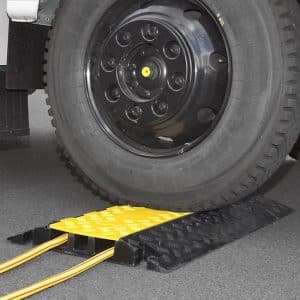 Loose cables and hoses can quickly become a problem in a busy workplace. People walk across them, vehicles drive over them, and equipment gets moved around them. Without proper protection, cables can become damaged and create unnecessary trip hazards.
A suitable cable protector helps create a safer route for cables and hoses while protecting them against traffic and daily use. However, not every application needs the same type of protection. The number of cables, their size, the expected load, and the layout of the route all influence which solution works best.
This guide explains the main differences and helps you choose the right cable protector for your application.
What Should You Consider When Choosing a Cable Protector?
Start with the environment rather than the product. A cable running across a temporary pedestrian route faces very different conditions from a hose crossing a busy industrial or vehicle area.
First, consider what needs to pass through the protector. Check the number of cables or hoses and their diameter. The channels need enough space without forcing cables into an opening that is too small.
Next, look at the traffic. Will people walk across the protector, or will equipment and vehicles also pass over it? The required weight capacity can change considerably between these situations.
Finally, think about the route itself. A straight cable run is simple. A route that needs to turn around machinery, work areas or other obstacles may require corner pieces.
Drop-Over Cable Covers for Existing Cable Routes
Sometimes the cables are already in position and simply need protection from above. In this situation, a drop-over cable cover can be a practical solution.
Instead of opening a lid and placing the cables inside, you position the cover over the existing cable route. This makes drop-over covers useful when you want a straightforward installation or need to protect cables that cannot easily be disconnected.
Rubber United’s Rubber-Drop Over Cable Cover is made from durable rubber and comes with two or three channels. It has a specified weight capacity of 1.5 tonnes.
For single-cable routes, the PVC Drop-Over Cable Cover 1 Channel – Black provides a one-channel solution in black. Depending on the selected size, the specified weight capacity is 1.5 or 2 tonnes.
The same type of PVC Drop-Over Cable Cover is also available in yellow. The brighter colour can make the cable route more visually noticeable in the surrounding area.
Heavy-Duty Cable Protectors for Multiple Cables
When several cables need to cross an area with heavier traffic, a cable protector with separate channels and a lid can offer a more structured solution.
The cables sit inside individual channels in the rubber base. The PVC lid then closes over them. This keeps the cables organised while creating a defined crossing point.
Rubber United offers 2, 3 and 5 channel versions.
The Cable Protector – 2 Channel measures 100 x 25 x 5 cm. It has two 32 x 22 mm channels and a specified weight capacity of 3.1 ton.
For an additional cable route, the Cable Protector – 3 Channel measures 90 x 30 x 4.5 cm. Its three channels accommodate cables up to 30 mm in diameter, while the specified weight capacity is 5 ton.
Where more separate cable channels are required, the Cable Protector – 5 Channel provides five channels. It measures 90 x 50 x 5.8 cm, has channel dimensions of approximately 38 x 35 mm and a specified weight capacity of 4.6 ton.
More channels do not automatically mean a higher load capacity. Choose the protector based on the complete specification rather than the number of channels alone.
Cable Protector Corner Pieces for Routes That Need to Turn
Cable routes do not always travel in a straight line. Machinery, walls, workstations and access routes can force cables to change direction.
Trying to create a sharp bend with straight cable protectors can result in a poor fit and an untidy route. Rubber United therefore offers left and right corner pieces for the 2-, 3-, and 5-channel cable protectors.
These corner pieces allow you to change direction while continuing the protected cable route. This is especially useful when planning longer cable runs around equipment, work areas or other obstacles.
When Do You Need a Heavy-Duty Hose Ramp?
Electrical cables are not the only lines that need protection. Industrial environments can also have larger hoses or pipes crossing areas used by vehicles and equipment.
A standard cable protector may not provide enough channel space for these applications.
The Hose Ramp – 2 Channel provides two large 90 x 70 mm channels. The solid rubber ramp measures 85 x 30 x 8.5 cm and has a specified weight capacity of 20 ton.
The larger channels make this type of heavy-duty ramp particularly relevant when the route contains hoses or larger lines rather than standard electrical cables.
However, always check the dimensions of the hose and the expected load before selecting a ramp.
Outdoor Cable Protectors: What Should You Look For?
Outdoor cable protection requires more than simply covering a cable.
Think about the surface, traffic, weather exposure and visibility of the route. An outdoor cable protector should sit securely on the intended surface and provide enough capacity for the expected traffic.
Also consider how water moves through or around the area. Outdoor sites can change considerably after rain, so the complete installation environment matters.
For temporary work areas, events and industrial sites, visibility can also play an important role. Black and yellow cable ramps can help make a crossing easier to recognise.
Most importantly, do not select an outdoor cable protector based on appearance alone. Match the channel dimensions and stated load capacity to the actual application.
Cable Cover, Cable Protector or Hose Ramp: Which One Should You Choose?
The easiest way to choose is to work backwards from the application.
Swipe or scroll horizontally on a mobile device to view the complete table.
| Product | Channels | Specified Weight Capacity | Useful When |
|---|---|---|---|
| Rubber Drop Over Cable Cover | 2 or 3 | 1.5 tonnes | Covering an existing cable route from above |
| PVC Drop Over Cable Cover | 1 | 1.5 or 2 tonnes* | Protecting a single cable route |
| 2 Channel Cable Protector | 2 | 3.1 tonnes | Two separate cable channels |
| 3 Channel Cable Protector | 3 | 5 tonnes | Three separate cable channels |
| 5 Channel Cable Protector | 5 | 4.6 tonnes | Keeping several cable lines separated |
| 2 Channel Hose Ramp | 2 | 20 tonnes | Larger hoses or lines and heavier-duty applications |
*Depending on the selected PVC drop over cable cover size.
Why Channel Size Matters as Much as Weight Capacity
It can be tempting to focus on weight capacity first. However, a cable protector is only useful if the cables or hoses actually fit inside it.
Measure the outside diameter of the cables or hoses before choosing a product. Then compare that measurement with the available channel dimensions.
Also allow enough room to place and remove the cable without forcing it into the channel.
For example, an application involving one large hose may need a hose ramp even when a multi-channel cable protector offers sufficient weight capacity. The deciding factor in that situation is the available channel space.
Plan the Complete Cable Route Before Installation
A good installation starts before the first cable protector goes on the floor.
Identify where the cables begin and end. Then determine where people, vehicles, or equipment will cross the route. Try to avoid unnecessary crossings and sharp changes in direction.
Next, calculate how many straight sections you need. If the route changes direction, include the appropriate left or right corner pieces.
This approach helps create a more organised cable route and prevents you from discovering halfway through the installation that a different protector or corner section is required.
FAQ
Q1. What is a cable protector?
A cable protector covers or contains cables that cross floors, walkways, or traffic areas. It helps protect the cables from physical damage and creates a more defined crossing point.
Q2. What is the difference between a cable cover and a cable protector?
The terms often overlap. A drop-over cable cover sits over an existing cable route, while some heavy-duty cable protectors use channels and an opening lid so cables can be placed inside the protector.
Q3. How many channels should a cable protector have?
Choose the number of channels according to the number and size of cables you need to route. Rubber United offers cable protection solutions with one, two, three and five channels, as well as larger two-channel hose ramps.
Q4. Can cable protectors be used outdoors?
The right choice depends on the specific product and installation environment. Consider the surface, weather exposure, drainage, visibility and expected traffic before choosing an outdoor cable protector.
Q5. Can a cable protector handle vehicle traffic?
Some cable protectors have specified weight capacities designed for considerably heavier loads than pedestrian traffic. However, always check the specifications of the individual product and assess the actual vehicle, load, and installation conditions before use.
Q6. What should I use for large hoses?
Start by measuring the hose diameter. For larger hoses, a product with larger channels may be required. Rubber United’s 2 Channel Hose Ramp has 90 x 70 mm channels and a specified weight capacity of 20 tonnes.
Q7. Can a cable protector route turn around a corner?
Yes. Rubber United offers left and right corner pieces for its 2-, 3-, and 5-channel cable protectors. These allow you to build a protected route that changes direction.
Need Help Choosing a Cable Protector?
Choosing the right cable protector starts with four things: the number of cables or hoses, their dimensions, the expected load, and the route they need to follow.
Rubber United supplies cable protection solutions for different commercial and industrial applications throughout South Africa. If you are unsure which product or configuration fits your application, contact our customer service team for assistance.
Related Posts