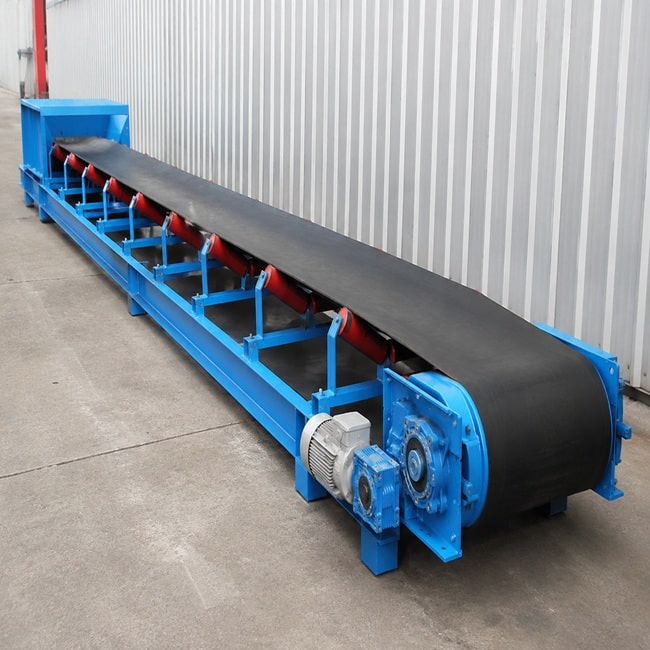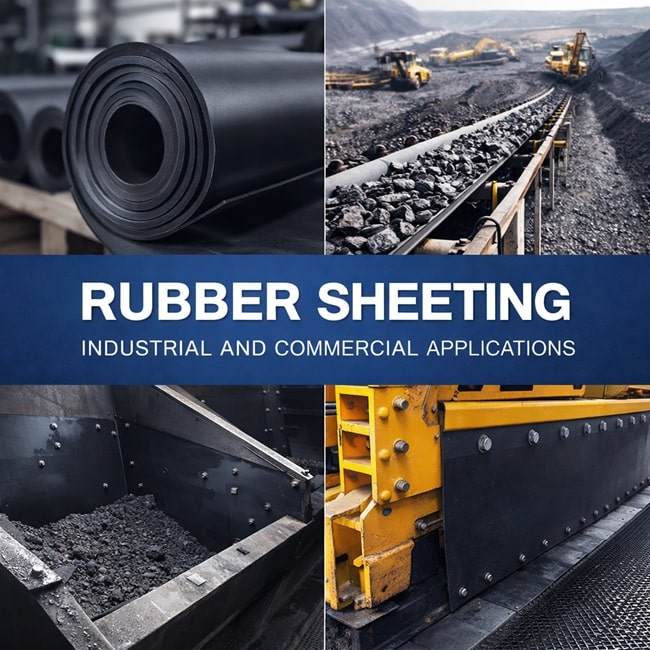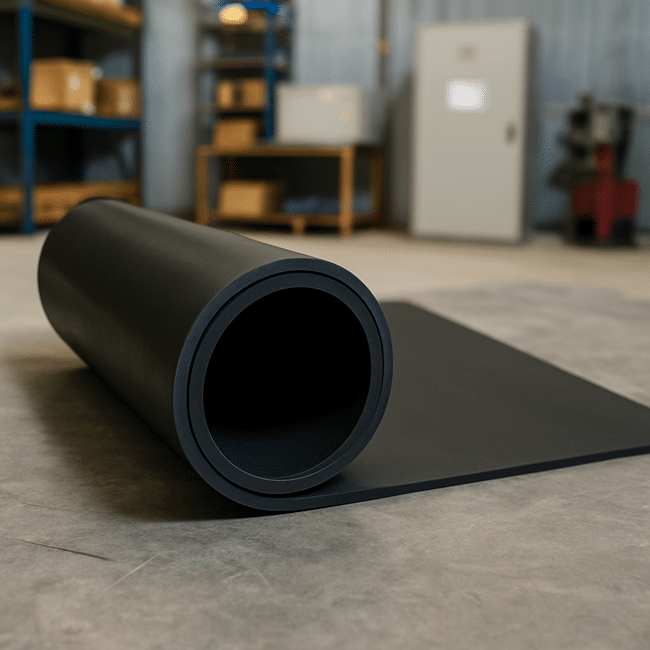
Rubber Lining Solutions for Conveyor Systems and Industrial Applications Many industrial facilities use rubber lining…
Abrasion Resistant Rubber Sheeting for Heavy Duty Applications
 Industrial environments often expose materials to constant wear, friction, and impact. In these conditions, standard materials can break down quickly, which leads to higher maintenance costs and unexpected downtime. Abrasion-resistant rubber sheeting offers a practical solution by protecting surfaces and extending the lifespan of equipment and work areas.
Many industries in South Africa, including mining, construction, transport, and manufacturing, rely on durable materials that can handle continuous use. In these environments, selecting the right rubber sheets for wear resistance can make a measurable difference in performance and long-term cost efficiency.
If your operation requires reliable protection in high-wear conditions, our industrial rubber sheeting range includes solutions designed for demanding applications.
Why abrasion-resistant rubber sheeting matters in industrial environments
Wear occurs when materials come into repeated contact with moving parts, rough surfaces, or transported materials. Over time, this friction can damage floors, equipment, and structural components. In heavy-duty environments, this process happens much faster due to constant movement and pressure.
Businesses that operate in these conditions need materials that can absorb impact and reduce direct contact between surfaces. Rubber sheets provide a protective layer that helps limit abrasion and reduce the rate of surface degradation.
Common heavy duty applications where wear resistance is critical
High wear conditions are common in many industrial sectors. Operations that handle bulk materials, heavy equipment or continuous movement often require additional protection to maintain performance.
Typical applications include floor protection in workshops and factories, protective lining in equipment zones, and surface coverage in areas where materials move frequently. These environments require durable materials that can withstand repeated friction without failing prematurely.
In more demanding industries, such as mining and bulk material handling, abrasion becomes even more aggressive. Surfaces exposed to rocks, minerals and continuous material flow require stronger solutions that can handle ongoing impact and wear.
How abrasion resistant rubber sheeting reduces wear and surface damage
Rubber sheeting acts as a buffer between surfaces. Instead of direct contact between hard materials, the rubber absorbs part of the impact and reduces friction. This helps protect both the underlying structure and the materials in motion.
In many applications, businesses use rubber sheets to line surfaces, protect equipment or create a controlled contact layer. This approach reduces damage, improves safety and helps maintain consistent operation over time.
In heavy duty environments, reinforced options such as insertion rubber sheeting offer additional strength and durability. These solutions can support applications where standard materials may not provide enough resistance.
Which rubber types perform best in high wear environments
Different rubber compounds perform differently under stress. Choosing the right material depends on the type of wear, exposure conditions and the specific application.
Insertion rubber sheeting provides additional reinforcement due to its fabric insert. This makes it suitable for heavy duty use where strength and wear resistance are critical.
General purpose rubber sheeting works well in standard industrial environments where moderate wear occurs. It offers a flexible and cost effective solution for general protection.
Nitrile rubber sheeting performs well in environments where oil and fuel exposure combine with wear. This makes it suitable for workshops and industrial settings where both factors play a role.
Neoprene rubber sheeting offers a balance between wear resistance and environmental protection. It works well in applications exposed to weather, chemicals and mechanical stress.
What to consider when selecting a solution for heavy duty use
Before selecting a product, businesses should assess the working conditions. The level of abrasion, the type of materials involved and the presence of oil, chemicals or moisture all influence the choice.
Thickness and reinforcement also play an important role. Heavier applications often require stronger and thicker materials to maintain performance over time. In lighter environments, a more flexible solution may be sufficient.
It is important to match the material to the actual application instead of selecting a general solution. A more targeted approach can reduce replacement frequency and improve overall efficiency.
If you need help selecting the right solution for your operation, contact our customer service team for professional advice.
FAQ
Q1: What is abrasion resistant rubber sheeting?
It is rubber sheeting designed to withstand friction, impact and continuous wear in industrial environments.
Q2: Where is it typically used?
It is commonly used in factories, workshops, mining environments and areas where materials cause surface wear.
Q3: Which type is best for heavy duty use?
Reinforced options such as insertion rubber sheeting are often suitable for heavier applications.
Q4: Does thickness affect performance?
Yes, thicker materials generally provide better durability in high wear environments.
Q5: Can it be used in mining applications?
Yes, it is often used in demanding environments where abrasion and impact are significant factors.
Related Posts