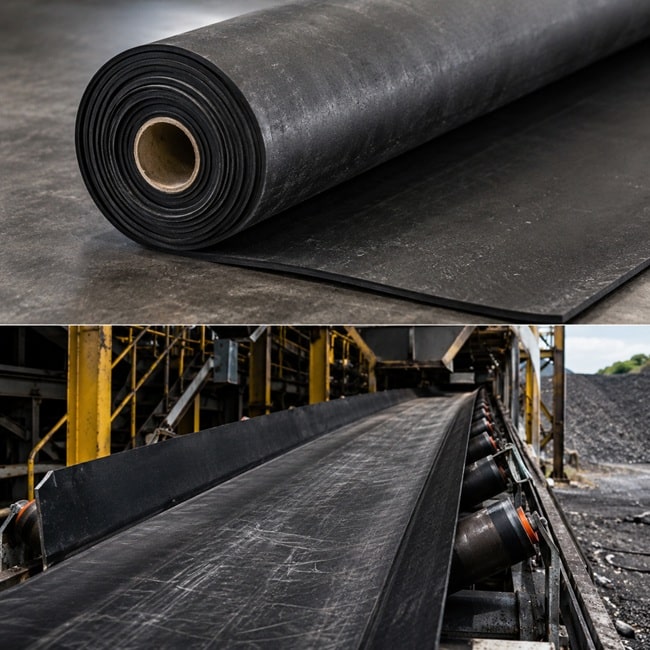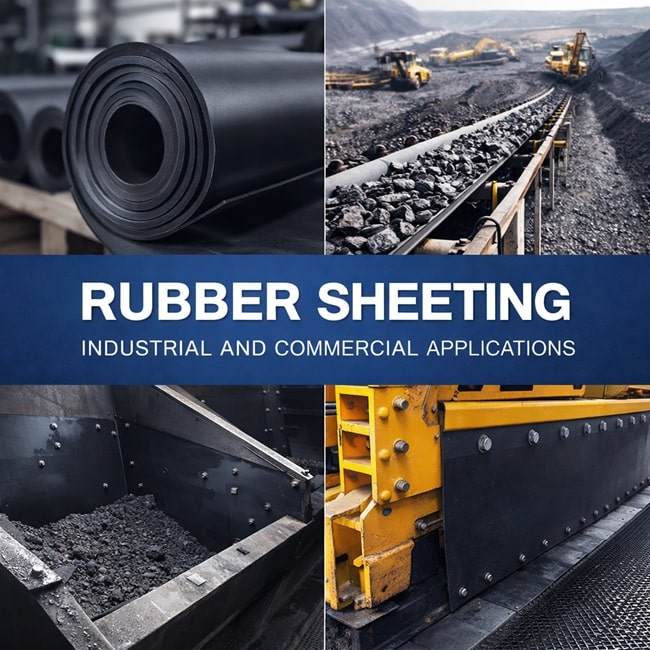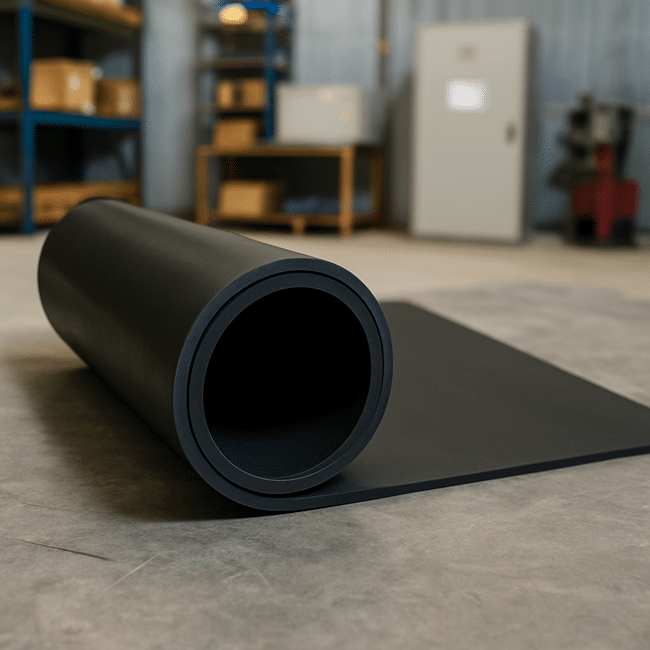
Industrial environments often expose materials to constant wear, friction, and impact. In these conditions, standard…
Rubber Lining Solutions for Industrial Conveyor and Material Handling Systems
 Rubber Lining Solutions for Conveyor Systems and Industrial Applications
Many industrial facilities use rubber lining solutions in conveyor and material handling systems that operate continuously throughout the day. Over time, moving products create friction on transfer points, loading zones and other high contact areas. As a result, equipment surfaces wear down faster and businesses face more maintenance, more inspections and shorter equipment lifespan.
To reduce these problems, many companies install rubber lining materials in conveyor and material handling systems. These materials help protect surfaces, absorb impact and support reliable long term operation in demanding industrial environments.
You will commonly find rubber lining applications in warehouses, recycling facilities, manufacturing plants, logistics centres and processing operations where conveyor systems support daily production and material movement.
Businesses looking for industrial wear protection solutions can explore our rubber sheeting range for conveyor systems, equipment protection and general industrial applications.
Industrial applications for rubber lining materials
Industrial conveyor systems operate in environments where products, materials and components move continuously through the facility. Repeated movement across rollers, transfer points and support surfaces creates friction and surface wear in heavily used areas.
Warehouses and logistics centres regularly use conveyor systems for packaged goods and distribution processes. Manufacturing facilities use conveyors to move products between production stages. Recycling operations often handle abrasive and irregular materials that place additional stress on equipment surfaces.
Businesses also use rubber lining materials in hoppers, tanks, handling systems and support structures where impact reduction and surface protection improve long term reliability.
In many industrial applications, rubber lining materials help reduce direct contact between products and exposed steel surfaces. This supports smoother operation and helps limit unnecessary wear in high contact areas.
Rubber lining for damping and vibration control
Rubber materials offer different functional properties depending on the compound and application requirements. Besides surface protection, rubber lining materials also support damping and vibration control systems where shock absorption and mechanical stability are important.
Industrial equipment and conveyor systems generate constant movement and vibration during operation. Rubber components help absorb shocks, reduce mechanical stress and support more controlled operating conditions.
These properties make rubber lining materials suitable for applications where equipment protection, vibration reduction and impact absorption all play an important role.
Protective rubber materials can also support operational stability in conveyor systems and industrial machinery exposed to continuous movement during daily use.
Selecting the right material for industrial conditions
Different industrial environments require different material properties. Businesses should therefore evaluate friction levels, environmental exposure, operating temperatures, mechanical stress and the type of products handled within the system.
General purpose rubber sheeting supports many industrial applications where moderate wear resistance and general surface protection are required.
Applications exposed to higher stress levels may benefit from insertion rubber sheeting. This material contains reinforced fabric layers that provide additional durability and structural support.
Industrial environments exposed to oils or fuels may require nitrile rubber sheeting. Environments exposed to weather or moisture may benefit from neoprene rubber sheeting or EPDM rubber sheeting depending on the operating conditions.
For more information regarding chemical resistance, temperature suitability and application compatibility, we recommend reviewing the different products available within the Rubber United range.
What businesses should consider before selecting a rubber lining solution
Before selecting a material, businesses should first evaluate how the system operates during daily use. Operational frequency, environmental conditions, exposure to oils or moisture, mechanical stress and impact intensity can all influence long term performance.
Thickness, reinforcement and compound selection also play an important role. The correct combination depends on the operational demands of the application.
Industrial operations that rely heavily on conveyor systems and material handling equipment often benefit from solutions designed for continuous daily use and long term durability.
To determine the correct rubber grade, businesses should always consider the operating environment and the specific requirements of the application. Oil exposed environments and outdoor applications often require different material properties.
Selecting the correct rubber lining solution helps businesses improve durability and support long term industrial performance.
If you are unsure which material best suits your application, you can always contact our customer service team for assistance.
FAQ
Q1: Where are rubber lining materials commonly used?
Businesses commonly use rubber lining materials in conveyor systems, warehouses, manufacturing plants, recycling facilities and industrial material handling environments.
Q2: Can rubber sheeting help absorb vibration and shocks?
Yes. Rubber materials often support damping and vibration control systems where shock absorption and mechanical stability are important.
Q3: Which rubber material is suitable for higher stress applications?
Many businesses choose insertion rubber sheeting for applications that require additional reinforcement and durability.
Q4: Which material is suitable for oil exposure?
Industrial environments exposed to oils and fuels often require nitrile rubber sheeting.
Q5: How do businesses select the correct material?
Businesses usually select materials based on operating conditions, environmental exposure, mechanical stress and application requirements.
Related Posts